Why Your Weird Little Hobby Is the Coolest Thing About You Right Now
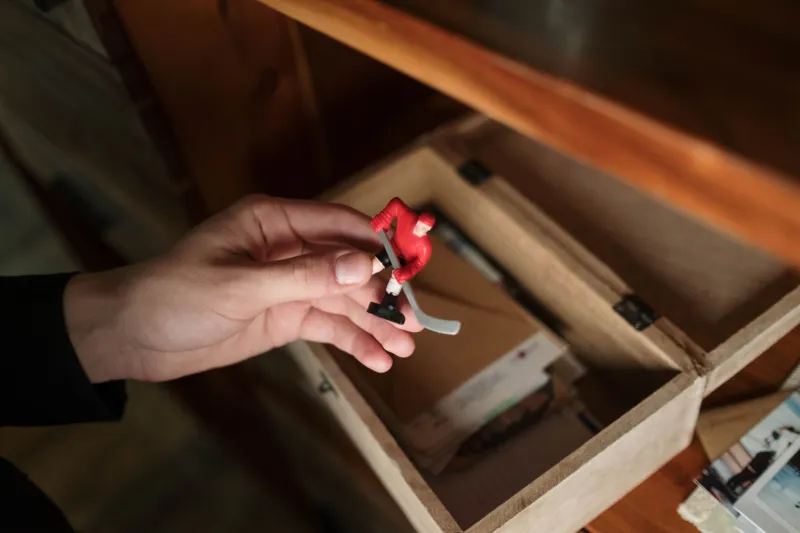
Let's say you spend your weekends hunting for obscure 1990s mecha model kits at flea markets across three states. Or maybe you're deep in a Discord server dedicated entirely to cataloguing the regional variations of vintage Japanese stationery. Perhaps you're the person who has opinions — strong, detailed, slightly alarming opinions — about the ranking system of early 2000s magical girl anime figures.
A few years ago, you might have kept that to yourself at parties. Led with something more neutral. "I like music" or "I watch a lot of shows."
Now? That niche obsession is your entire personality, and somehow — somehow — that's become genuinely, undeniably cool.
Welcome to the era of the micro-passion flex.
The Death of the Generic Hobby
There's a very specific social awkwardness that comes from having mainstream tastes in an era of infinite content. When everyone has access to the same streaming platforms, the same TikTok trends, the same algorithmically-recommended music — saying you "like Netflix and Spotify" as personality descriptors carries approximately zero social weight.
But tell someone you're three years into building a complete set of gashapon capsule toys from a single 2003 Japanese vending machine series? Suddenly you're interesting. Suddenly people want to know more. Suddenly you have a story.
Gen Z figured this out in a way that previous generations genuinely didn't have access to. The internet didn't just make niche hobbies possible — it made them viable. You can find your people, build your knowledge base, source your obscure items, and participate in a community of similarly obsessed humans without ever leaving your bedroom. The barrier to entry for having a deeply specific passion has basically dropped to zero.
And in a world where everyone's online presence looks increasingly similar, being the person who knows everything about a very small thing is a genuine differentiator.
Identity in the Age of the Algorithm
Here's the slightly more interesting thing happening underneath the surface: niche hobbies aren't just fun. They're doing identity work that mainstream culture used to handle.
For a lot of Gen Z, traditional identity markers — career, location, relationship status, even broad cultural tastes — feel less stable and less defining than they did for previous generations. The job market is chaotic. Geographic roots are complicated. The idea of a single, coherent "lifestyle" to aspire to feels increasingly fictional.
What fills that gap? Passion. Specificity. The thing you know more about than almost anyone else in your immediate social circle.
There's a reason "I collect [incredibly specific thing]" has become such a common icebreaker in Gen Z spaces. It's not just small talk. It's a quick, efficient way of communicating: here is something I care about deeply, here is how I spend my time by choice, here is a window into who I actually am underneath the surface-level stuff.
And because the hobby is niche enough that most people haven't encountered it before, it automatically comes with a story attached. You get to be the expert. You get to introduce someone to a world they didn't know existed. That's genuinely powerful social currency.
The Collecting Boom Is Real (And It Makes Total Sense)
Look at what's been trending in hobby spaces over the past few years: vintage figure collecting, obscure plushie hunting, physical media archiving, artisan keycap building, hand-stamped washi tape hoarding, retro game cartridge restoration. These are not passive consumption hobbies. They require knowledge, skill, and often a significant time investment.
And people are into it. Not just doing it quietly at home, but sharing it — building YouTube channels, TikTok series, Discord servers, and Reddit communities around incredibly specific sub-niches within sub-niches.
The PopoBunny community has its own version of this, honestly. The people who aren't just into cute stuff generally, but who are specifically into, say, the complete history of Sanrio character design evolution, or who can identify a vintage Kewpie doll variant by looking at the paint application on the eyes. That level of specificity used to feel embarrassing to admit. Now it gets you followers.
Part of what's driving this is a pushback against the disposability of fast trends. When everything is trending for fifteen minutes before being replaced by the next thing, having a hobby with depth — one you've been cultivating for years, one with history and context and community — feels like an act of resistance. It's saying: I'm not just consuming content. I'm building something.
The Community Factor Nobody Talks About Enough
Here's the thing about niche hobbies that doesn't get discussed as much as the aesthetic side: they are incredibly good at building real community.
When you find your people in a mainstream interest space, there are so many of them that the connections can feel shallow. But when you find the twelve other people in the world who are as obsessed as you are with, say, the specific run of 1998 magical girl merchandise from a single anime that aired for one season in Japan? Those connections go deep fast. You share knowledge, recommendations, finds, and a kind of mutual recognition that's hard to replicate in broader spaces.
These micro-communities — often housed in Discord servers, subreddits, or niche corners of TikTok — are doing something that mainstream social media has mostly failed at: creating genuine belonging around shared passion rather than shared demographics.
A lot of Gen Z members we've spoken to describe their hobby communities as some of their most meaningful social connections, including people they've never met in person. The hobby is the entry point, but what develops is real friendship.
So About That Weird Thing You're Into...
If you've been low-key embarrassed about how much you care about your very specific, slightly unexplainable passion — stop. Immediately. That thing you know too much about? That collection taking up a corner of your room? That Discord server where you're a moderator for a community of people who share your exact niche obsession?
That's the good stuff. That's the stuff that makes you genuinely interesting to talk to, genuinely connected to people who get it, and genuinely yourself in a way that following whatever's trending this week will never replicate.
The weird little hobby isn't a footnote to your personality. Increasingly, it is your personality — and right now, that's exactly where you want to be.