Rainbow Clothes Won't Save You (But Here's What Might Actually Help)
Okay, real talk: when did getting dressed become a mental health intervention?
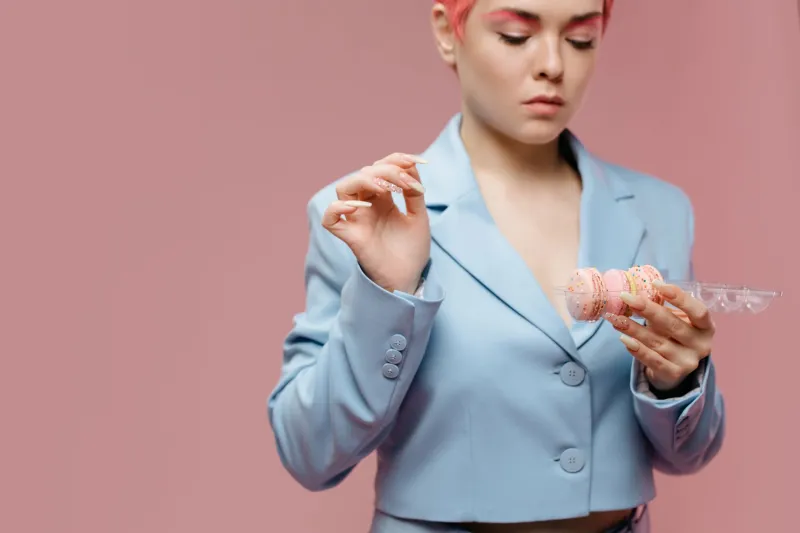
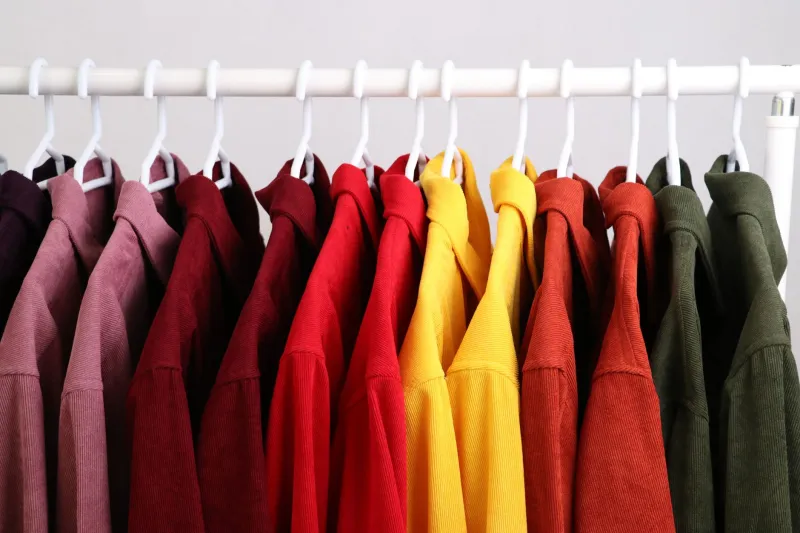
Somewhere around 2021, the internet collectively decided that wearing bold, bright, maximalist clothing was basically therapy. Dopamine dressing — the idea that strategic color choices can chemically boost your mood — exploded across TikTok, Pinterest boards, and every fashion publication that wanted to feel relevant. Suddenly, buying a lemon-yellow trench coat wasn't a questionable financial decision. It was self-care.
And look, we get it. The world was a lot. The clothes were fun. Nobody was going to argue against joy.
But now it's a few years later, and some of us are standing in front of closets stuffed with color-blocked sets, printed co-ords, and at least four different shades of cobalt — and still not feeling particularly great. So what happened?
The Trend That Felt Like a Cure
Dopamine dressing has actual psychological roots, to be fair. Fashion psychologists (yes, that's a real field) have long pointed to the connection between color, mood, and self-perception. Studies suggest that what we wear affects how we feel and how we move through the world. That's real science. That's not nothing.
But here's where the internet took a legitimate concept and ran it directly off a cliff: the leap from "clothing can influence mood" to "buying new clothing will fix your mood" is a canyon-sized gap that somehow nobody flagged in the original discourse.
One is about getting dressed intentionally. The other is retail therapy with a scientific-sounding name slapped on top.
When we talked to a handful of Gen Z folks about their dopamine dressing experiences, the pattern was kind of telling.
"I genuinely felt amazing the day I bought this orange co-ord set," said Maya, 22, from Austin. "And then I got home, hung it up, and felt exactly the same as I did before. The high lasted like forty-five minutes."
That forty-five-minute window? That's not dopamine dressing. That's just shopping.
The Instagram Trap Hiding Inside Your Wardrobe
Here's something worth sitting with: a lot of the clothing that gets labeled as "dopamine dressing" online is specifically designed to look good in photos. Saturated colors read well on camera. Bold prints stop the scroll. The aesthetic is optimized for a 1x1 square on Instagram, not necessarily for how you feel walking to your 9 AM class or sitting through a long shift.
There's a difference between clothes that photograph as joyful and clothes that feel joyful on your actual body in your actual life. And the algorithm has gotten very, very good at making us confuse the two.
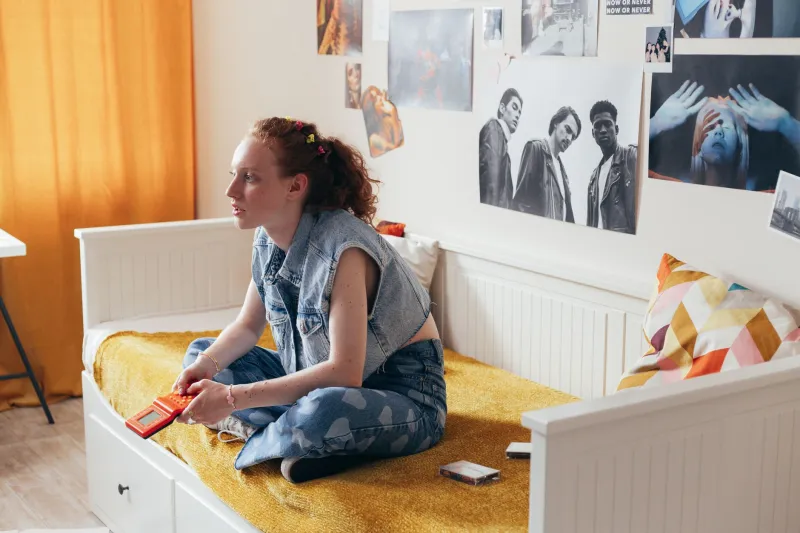
Jordan, 24, from Chicago, put it bluntly: "I bought so many things because they looked incredible on the influencer. On me, in my apartment, going to the grocery store? I just felt kind of costume-y. Like I was dressed for a vibe that wasn't mine."
And that's the crux of it, isn't it? Wearing someone else's aesthetic version of happiness isn't the same as dressing in a way that makes you feel like yourself.
So What Does Actually Work?
Before this turns into a lecture, let's be clear: color is genuinely fun. Prints are genuinely fun. Buying a cute thing because it sparks something in you is not a crime. PopoBunny is not here to take your fun clothes away.
But there are some real distinctions between dressing in a way that supports your mood and dressing in a way that's just another form of emotional spending:
It works when: You reach for something specific because it matches how you want to feel today. You're using your existing wardrobe. The item fits how you actually live your life, not the life you're performing online.
It's not working when: You're buying something new specifically to feel better in the next thirty minutes. The purchase is a response to anxiety, boredom, or a bad day rather than genuine excitement. You already own twelve variations of the same item and still don't feel like enough.
The version of this trend that actually holds up? It's less about buying colorful things and more about paying attention to what you already own and how different pieces make you feel when you put them on. That part costs nothing.
Confidence Isn't a Color
The most consistent thing we heard when talking to people about this? The clothes that make them feel genuinely good aren't always the most visually interesting ones.
Sometimes it's a worn-in pair of jeans. Sometimes it's a hoodie from a band they loved in high school. Sometimes it's a dress that fits perfectly and doesn't require constant adjusting. None of those things are particularly Instagram-able. All of them showed up repeatedly when people described feeling actually confident versus performing confidence.
Real style confidence is less about what you're wearing and more about the relationship you have with your own body and sense of self. Clothes can support that relationship. They cannot build it from scratch, no matter how many shades of tangerine you add to your cart.
The Wardrobe Edit Nobody Wants to Do
If you're feeling the disconnect between your colorful closet and your actual mood, the move isn't necessarily to buy more. It might be to spend twenty minutes with what you already have and actually notice what makes you feel like yourself versus what you bought in a moment of wanting to feel different.
Keep the stuff that makes you feel like you — whatever that looks like. Let go of the stuff that's just someone else's aesthetic you accidentally adopted.
And if you do want to buy something new? Buy it because you love it, not because you're hoping it'll fix something. The clothes can come along for the ride. They just can't drive.