Glow Different: How Being the Weird One in the Room Actually Pulls the Right People In
Let's set the scene. You're at a party, a class, a Discord server — wherever humans gather to do the awkward dance of becoming friends. You have two options. Option A: you mirror everyone else, laugh at the right moments, keep your niche interests tucked safely in your chest like a secret treasure map. Option B: you mention, completely unprompted, that you have strong opinions about the lore accuracy of a 2008 anime, or that your bedroom wall is dedicated entirely to pressed flowers you foraged yourself.
Most people choose Option A. And most people wonder why their friendships feel kind of... hollow.
Here's the thing PopoBunny has been thinking about a lot lately: being visibly weird isn't the social liability you were taught it was. It's actually the quietest, most powerful form of confidence that exists.
What Even Is "Visible Weirdness"?
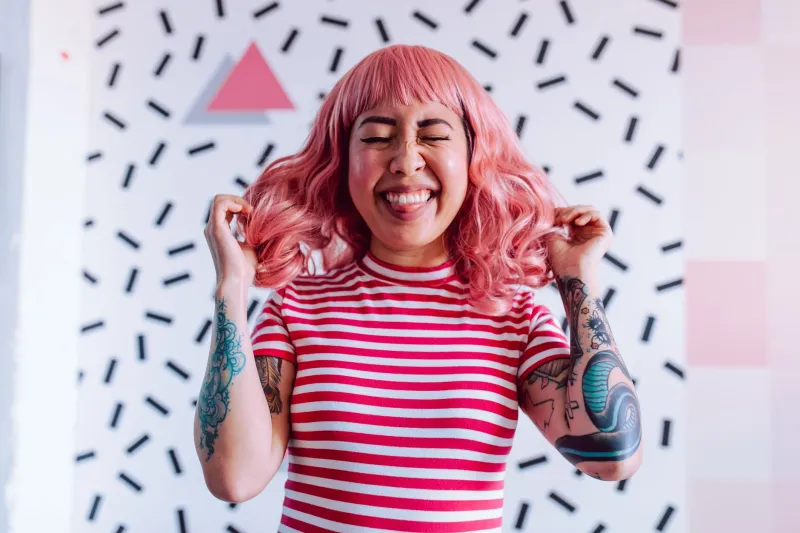
First, let's be clear — we're not talking about being weird for shock value. We're not talking about the performative kind of quirky that shows up in a 2012 Tumblr post. We're talking about the genuine, unfiltered version of you that has very specific tastes, unexpected hobbies, and opinions that don't always align with whatever's trending.
Maybe you collect vintage fast food toys. Maybe you can recite the entire soundtrack of a video game nobody else has played. Maybe your fashion sense looks like a fever dream in the best possible way. Whatever it is — that's the thing. That specific, particular, irreplaceable thing that makes people go "huh, I've never met someone like you before."
That reaction? That's the whole point.
The Psychology Behind Why Authenticity Is Magnetic
Psychologists have a concept called "optimal distinctiveness theory," which basically says humans want to belong and stand out simultaneously. We want to be part of something, but we also want to feel like individuals within it. When someone shows up fully as themselves — unfiltered, a little odd, genuinely enthusiastic about something unexpected — they satisfy both of those needs for the people around them.
They make others feel like it's safe to also be a little weird.
Jasmine, 22, from Atlanta, told us she spent most of high school hiding the fact that she was obsessed with competitive origami. "I thought it was the lamest thing in the world to admit," she said. "Then I mentioned it once in college, kind of as a joke, and three people in my dorm immediately wanted to learn. Two of them are my best friends now."
That's not a coincidence. That's the weird magnet doing its thing.
Fitting In Is Exhausting (And It Doesn't Even Work)
Here's the brutal truth about blending in: it takes enormous energy, and the reward is friendships built on a version of you that doesn't actually exist. You're essentially trapping yourself in a performance that you have to maintain indefinitely.
And the people you attract when you're performing? They're attracted to the performance. Not you.
Tyler, 19, from Portland, spent two years trying to seem cooler than he was. He dressed differently, listened to music he didn't actually like, and never once mentioned that his favorite hobby was building elaborate miniature dioramas. "I had a whole group of 'friends' and felt completely alone," he said. "The moment I started being honest about what I was into, the group got smaller but everything felt real."
Smaller, but real. That's the trade. And it's a wildly good one.
The Quiet Confidence Piece
We talk about confidence like it has to be loud. Like it has to be a girl strutting into a room, or someone making a bold declaration. But the quietest, most unshakeable confidence is just... not caring if someone thinks your interests are weird.
It's wearing the thing. Mentioning the thing. Being enthusiastic about the thing without pre-apologizing for it.
When you stop performing for the room and start just existing in it, something shifts. People can feel the difference between someone who needs their approval and someone who's just genuinely happy being who they are. The second person is infinitely more interesting to be around.
How to Actually Start Showing Up Weird (In Practice)
Okay, so this all sounds great in theory. But if you've been hiding your weirdness for years, just "being yourself" isn't a switch you can flip overnight. Here's how to ease into it:
Start small with something low-stakes. Mention a niche interest in a casual conversation. See what happens. Nine times out of ten, at least one person will lean in.
Let your aesthetic do some of the talking. Your bag, your phone case, your pins and patches — these are conversation starters that don't require you to say a word. Let people come to you.
Stop pre-apologizing. Notice how often you say "this is so weird but..." or "I know this is random..." before sharing something about yourself. Cut those qualifiers. Just say the thing.
Find one online space where you're fully yourself. Sometimes it's easier to practice visibility in a community built around your interest before you bring it into your daily life. Subreddits, Discord servers, TikTok niches — they exist for exactly this.
The Right People Are Literally Waiting
Every time you hide a part of yourself, you're also hiding yourself from the person who would have loved that exact part. There are people out there — right now, probably close by — who would absolutely lose their minds over your specific flavor of weird.
They're just waiting for you to give them the signal.
The signal isn't a grand gesture. It's just being honest. Wearing the weird earrings. Mentioning the obscure interest. Laughing genuinely instead of performing a laugh.
Being visibly weird isn't about being the loudest person in the room. It's about being the most real one. And real, it turns out, is the most attractive thing you can possibly be.
So go ahead. Be the weird one. The right people are already on their way.