Tiny Objects, Big Feelings: How Friendship Bracelets and Enamel Pins Became Gen Z's Secret Handshake
Let's set the scene: you're at an Eras Tour stadium show. The person next to you has seventeen friendship bracelets stacked up their forearm. You're wearing eight. You make eye contact. You both know what's about to happen. Beads are exchanged. Names are learned. A friendship is forged in approximately forty-five seconds over the opening notes of "Miss Americana & The Heartbreak Prince."
This is not a random act of craft. This is culture.
The trading of small, handmade, cute objects — friendship bracelets, enamel pins, embroidered patches, resin charms, sticker swaps — has become one of the most distinctly Gen Z forms of social currency. It's happening at concerts, anime conventions, farmers markets, school cafeterias, and in carefully organized online communities. And it's way more layered and interesting than it looks from the outside.
The Taylor Effect (You Knew This Was Coming)
Look, we can't talk about the modern friendship bracelet moment without acknowledging the Taylor Swift Eras Tour and the cultural avalanche it triggered. When Swifties began showing up to shows loaded with handmade beaded bracelets specifically to trade with strangers, it wasn't just cute — it became a whole social architecture.
The rules were unspoken but universally understood: you make bracelets, you trade them freely, you wear everything you receive, and the stack on your arm becomes a physical record of every connection you made. The more shows you attended, the more trades you completed, the more your bracelet collection told a story about who you'd met and where.
But here's what's interesting: the Eras Tour didn't create this impulse. It amplified something that was already bubbling up across multiple subcultures simultaneously. Taylor's fandom just gave it a mainstream, highly visible stage.
The Enamel Pin Universe
Parallel to the bracelet world, enamel pin culture has been quietly building its own complex trading ecosystem for years — particularly in anime, gaming, and indie art communities.
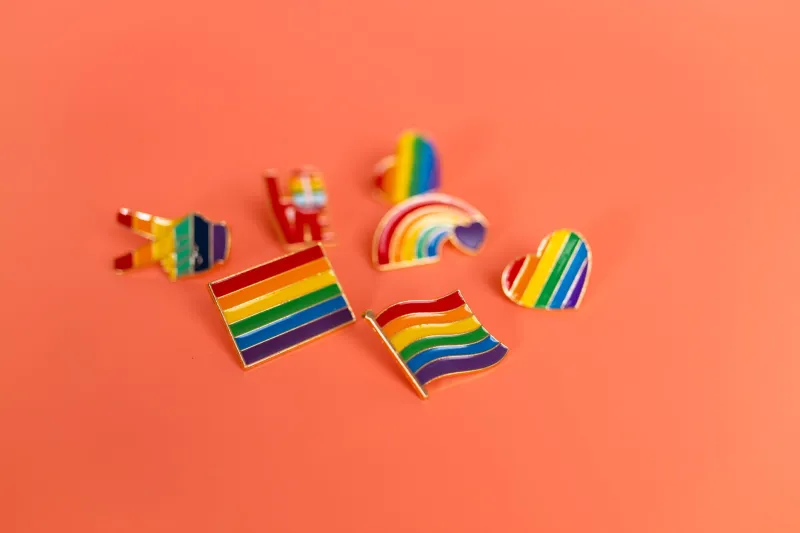
Enamel pins are small, collectible, and endlessly customizable. Independent artists design them, small-batch manufacturers produce them, and they end up on denim jackets, backpacks, lanyards, and canvas tote bags across America. Each pin is a tiny billboard for something its wearer cares about: a favorite anime character, a niche meme, a beloved game, an indie band, a personal philosophy rendered in metal and enamel.
At events like Anime Expo, San Diego Comic-Con, and smaller regional cons, pin trading is practically a competitive sport. People bring binders — actual three-ring binders with plastic sleeves — displaying their collection and what they're willing to trade. The negotiation is friendly but real. Rare pins from sold-out artist tables can trade for multiple common pins. Limited-edition convention exclusives are the crown jewels.
The economics are fascinating. A pin that retailed for $12 at a small artist's table might trade for something worth $30 in a secondary market, not because anyone's trying to profit, but because perceived rarity and personal meaning create a completely subjective value system. You can't put a price on the pin from your first con.
Identity Signaling Without Saying a Word
There's a sociological concept called "material culture" — the idea that objects carry and communicate meaning beyond their physical form. Friendship bracelets and pins are textbook material culture in action.
When someone wears a pin of a specific obscure anime character, they're not just decorating their bag. They're broadcasting a signal: I know this thing. Do you know this thing? Let's talk about this thing. It's a low-risk, high-reward social opener. If someone recognizes the reference, instant connection. If they don't, nothing lost.
For Gen Z — a generation that has grown up navigating social dynamics largely through screens, where tone is ambiguous and vulnerability is high-stakes — the pin or bracelet as conversation starter is genuinely valuable social technology. It externalizes identity in a way that invites engagement without demanding it.
The friendship bracelet stack works similarly. In Swiftie spaces, a bracelet with lyrics or album references from a deep cut signals a level of fandom investment that immediately sorts you into a specific tier of the community. Wearing one from "The Tortured Poets Department" before the album dropped was its own kind of badge.
The Maker Side: Indie Creators Fueling the Exchange
None of this trading culture exists without the makers — and the maker side of this ecosystem is its own whole world.
Independent artists on Etsy, Instagram, and TikTok are designing and producing small-batch pins, charms, and accessories specifically for trading communities. Many explicitly price and package their work with trading in mind — lower price points, sturdy backing cards, designs that reference niche fandoms with precision.
Some indie creators have built entire businesses around this. They design pins for specific convention circuits, build audiences of collectors who follow their work, and sell out limited runs in hours. The trading community creates demand; the demand creates opportunity for small-batch creators; the creators produce more interesting objects to trade. It's a self-sustaining little economy of cute.
There's also the growing "indie maker swap" phenomenon — organized online exchanges where crafters trade their handmade items with other crafters. These aren't sales; they're true swaps. You send something you made, you receive something someone else made, and the point is the exchange itself. Subreddits, Discord servers, and Instagram communities dedicated to these swaps have thousands of members doing exactly this on a regular basis.
Why Now? Why This?
It's worth asking why this particular form of connection is resonating so hard right now. The easy answer is that it's a reaction to digital overload — a craving for tangible, physical things you can hold in your hand.
But there's more to it. Trading culture is fundamentally about reciprocity and presence. You have to be there — at the show, at the convention, in the school hallway — to participate. You have to make eye contact with a stranger and offer something you made or collected. That's vulnerable in a small, manageable way. And the object you receive is proof that the moment happened, a physical souvenir of a real connection.
In a world where so many relationships exist primarily in digital space — where you can have 2,000 followers and feel profoundly alone — the ability to press a beaded bracelet into a stranger's hand and say "I made this for you" is doing something that a like button simply cannot replicate.
How to Get Started (If You're Not Already)
Honestly, the barrier to entry here is delightfully low. Seed beads and elastic cord run about $15 on Amazon and will make you approximately one million bracelets. Enamel pin starter collections can be assembled for under $30 at any convention artist alley. Indie maker swap communities are easy to find on Reddit and Discord and are generally extremely welcoming to beginners.
The only real requirement is showing up with something to offer and being open to what you receive in return.
Which, when you think about it, is pretty solid life advice in general.
Now go make some bracelets. The beads aren't going to string themselves.