Why Are We All Desperately Buying Back Our Childhoods? A Totally Unhinged Investigation
Somewhere right now, a 24-year-old with a full-time job, a 401(k), and a credit card is paying $85 for a Polly Pocket compact she had as a kid — one that her mom definitely donated to Goodwill in 2009 and that she definitely cried about for a week. She knows this is financially questionable. She is buying it anyway.
And honestly? Same. We get it. But why do we get it? That's the question PopoBunny decided to actually investigate, and friends, the answers are both deeply wholesome and kind of a lot.
The Nostalgia Economy Is Having Its Absolute Moment
Let's start with the numbers, because they are genuinely unhinged in the best way.
The global collectibles market was valued at over $400 billion in 2023, and it's projected to keep climbing. On platforms like eBay, Mercari, and Depop, searches for '90s and early-2000s toys spike reliably every year — particularly among buyers aged 18 to 30. That's Gen Z, a generation that, for the record, was barely alive during most of the '90s, shopping with the intensity of people trying to recover something precious.
Specific items commanding wild resale prices right now include:
- Polly Pocket compacts (original Bluebird era): $40–$300+ depending on condition
- Beanie Babies (rare editions, tags intact): anywhere from $20 to several hundred dollars
- Original Tamagotchis: $30–$80 for vintage units
- Y2K Bratz dolls: $50–$150 per doll, more for full sets
- First-generation Furbies: $25–$200 (and they still talk and it's still terrifying)
This isn't a niche hobby anymore. It's a full ecosystem with its own economy, its own influencer class (the "thrift and flip" crowd on TikTok), and its own emotional logic.
Okay, But Why? The Psychology of Buying Back the Past
Here's where it gets genuinely interesting. Dr. Clay Routledge, a psychologist who has spent years studying nostalgia, describes it as a "social emotion" — one that's triggered most intensely during periods of uncertainty, stress, or identity flux. And if there's one thing that describes being in your early-to-mid twenties right now in America, it's all three of those things simultaneously.
Climate anxiety. Student debt. A housing market that has essentially told an entire generation to go sit in a corner. The sense that the rules of adulthood that were promised to you simply don't apply anymore. In that context, reaching back toward a time when the biggest problem in your life was convincing your mom to buy you a Skip-It makes complete emotional sense.
Nostalgia, research shows, increases feelings of social connectedness, boosts self-continuity (your sense that your past self and current self are the same person), and temporarily reduces anxiety. It's not just sentimentality. It's a psychological coping mechanism. A really cute one.
Collector Stories: The People Behind the Hauls
We talked to a few collectors to get the real story beyond the aesthetics.
Jasmine, 26, from Atlanta: "I started collecting Sailor Moon merchandise about two years ago, right after I went through a really hard breakup. At first I told myself it was an investment. But honestly, unwrapping a vintage Sailor Moon doll and just... holding it? It felt like being eight again. Safe. Nothing could touch me."
Tyler, 22, from Portland: "I flip vintage toys for extra money, but I keep some. I kept a Furby I found at a Goodwill because I had the exact same one as a kid. I don't display it or anything. It just lives in my drawer. I don't know why, but knowing it's there helps somehow."
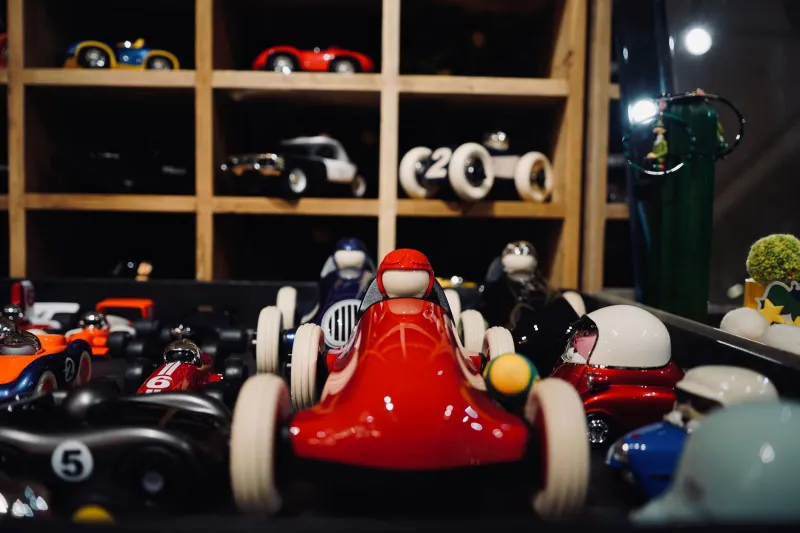
Priya, 25, from New Jersey: "My Hot Wheels collection is the one thing in my apartment that's completely mine. My roommates don't get it, my parents think it's weird, but when I add a new car to the shelf I feel this little burst of something. Pride, maybe? Or just... joy. Simple joy. We don't get enough of that."
What strikes you across all these stories is the same thread: in a chaotic world, these objects provide a small, controllable pocket of certainty and warmth.
Is This Healthy, Though? Let's Be Honest
For the vast majority of collectors, yes — absolutely. Collecting is a hobby with real social benefits (communities, shared knowledge, the thrill of the hunt), real creative outlets (displaying, customizing, trading), and legitimate financial upside if you play it right.
But let's be the friend who asks the slightly uncomfortable question: is there a version of this that tips into avoidance?
Psychologists distinguish between healthy nostalgia — which is reflective and ultimately forward-looking — and what's sometimes called "nostalgia dependency," where the past becomes a refuge from engaging with the present. Signs of the latter might include spending money you don't have on collectibles to feel better, using the hobby to avoid adult responsibilities, or feeling like your real life doesn't measure up to the childhood you're curating on your shelf.
None of this means you should sell your Polly Pockets. It means the occasional check-in — "am I collecting for joy, or collecting to hide?" — is worth doing.
Five Things Your Childhood Collection Might Actually Be Telling You
- You need more play in your life. Adulthood is aggressively unplayful. Your brain is literally asking you to reintroduce fun.
- You're craving simpler sensory experiences. Small, tactile, visually delightful objects are grounding. This is legitimate.
- You want to feel connected to your past self. Identity continuity is a real psychological need. Your collection is a bridge.
- You're part of a community. Collectors find each other. The social dimension of this hobby is underrated.
- You might need to address some present-day stuff. If the collection is growing fastest during your hardest seasons, it's worth noticing.
The PopoBunny Take: Collect With Your Whole Heart, But Stay Present Too
Here at PopoBunny, we are firmly, enthusiastically pro-cute-stuff. Your vintage toy shelf is valid. Your Beanie Baby display is a personality trait and we respect it. The joy of finding a piece you've been hunting for months is genuinely one of life's small, perfect pleasures.
But the best version of collecting isn't about escaping adulthood — it's about carrying the best parts of childhood into adulthood. The wonder, the playfulness, the ability to be delighted by small things. That's not regression. That's resilience.
Now if you'll excuse us, we just found a mint-condition original Tamagotchi on eBay and we have some important decisions to make. 🐰🌟