Hello Kitty Is My Whole Personality and I Will Not Be Taking Questions
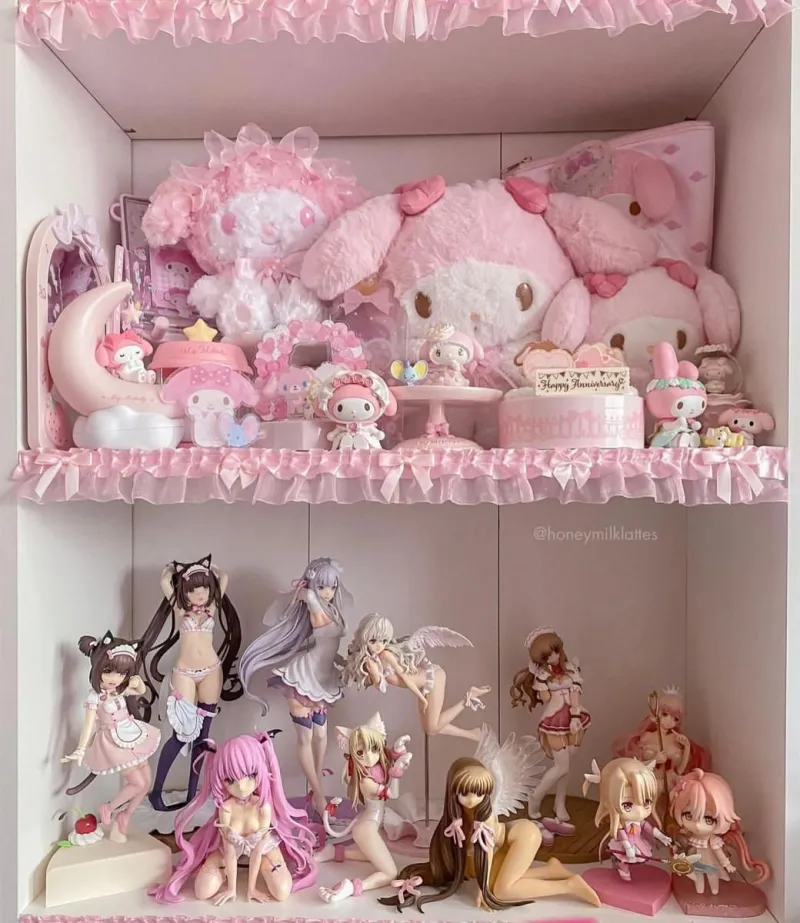
Photo: Sanrio character merchandise collection shelf aesthetic kawaii, via i.pinimg.com
Somewhere out there, someone is at a college lecture wearing a Kuromi hoodie, sipping from a Cinnamoroll thermos, with a Pochacco keychain dangling from their backpack zipper. Their phone case has Pompompurin on it. Their desktop wallpaper is a custom collage of their favorite Sanrio characters. And if you ask them about it, they will talk for forty-five uninterrupted minutes with a level of enthusiasm that could power a small city.
This is not a child. This is a 22-year-old adult human being, and they are thriving.
Welcome to the era of cute character identity — where your favorite fictional mascot isn't just something you liked as a kid, it's a fully developed extension of who you are, what you value, and who your people are. And honestly? It's one of the most wholesome things happening in culture right now.
From Merch to Meaning: How Characters Became Core Identity
The relationship between people and fictional characters isn't new. Mickey Mouse merchandise has existed since the 1930s. But something has shifted in the way younger generations — particularly Gen Z and younger Millennials — are engaging with characters they love. It's moved beyond passive fandom into something closer to active identity construction.
Take Sanrio, the Japanese company behind Hello Kitty, My Melody, and an ever-expanding universe of characters that seem to multiply like extremely adorable rabbits. Sanrio's US revenue has grown significantly over the past five years, driven almost entirely by adult consumers who are not buying these products for children. They're buying them for themselves, as expressions of personality, aesthetic sensibility, and community belonging.
Then there's Bluey, the Australian animated show about a Blue Heeler puppy family that has, by all reasonable metrics, taken over the brains of everyone under 35. Adults without children are watching it voluntarily. Adults with children are watching it more than their kids. Bluey merch flies off shelves at Target faster than employees can restock it, and a significant portion of those buyers are grown adults who simply feel deeply understood by a cartoon dog.
What's happening here is actually fascinating from a psychological standpoint.
The Psychology of "That Character Is Me"
Dr. Pamela Rutledge, a media psychologist who has written extensively about fandom and identity, describes character attachment as a form of "narrative identity" — we use stories and characters to understand ourselves and communicate who we are to others. When you put a Keroppi pin on your jacket, you're not just decorating. You're sending a signal: this is the kind of person I am.
For Gen Z especially, who came of age in a world of intense social pressure, political anxiety, and the constant noise of social media, cute characters offer something genuinely valuable: uncomplicated joy. There's no discourse around whether Cinnamoroll is problematic. Nobody is arguing about Bluey's political alignment. In a media landscape that can feel relentlessly heavy, cute characters are a safe harbor.
There's also something deeply intentional about choosing your character. Sanrio has leaned into this brilliantly — they've released quizzes, personality breakdowns, and social media content framing each character as a distinct personality type. Cinnamoroll fans are soft and dreamy. Kuromi fans are edgy with a hidden sweet side. My Melody fans are gentle and kind. People choose these affiliations the way previous generations chose astrology signs or Myers-Briggs types.
"I genuinely feel like My Melody represents how I want to move through the world," says Jade, a 24-year-old from Chicago who has been collecting Sanrio merchandise since she was in middle school. "She's sweet, she's a little shy, but she has her own inner world. When I carry my My Melody bag, it feels like wearing something true about myself."
The Collection as Self-Portrait
For many character fans, collecting isn't just a hobby — it's an ongoing creative project. Walk into the bedroom of a serious Sanrio collector and you're not just seeing a pile of stuff. You're seeing a curated environment, often organized by character, color, or era, that functions as a three-dimensional self-portrait.
Social media has supercharged this. TikTok and Instagram are full of "shelf tours" where collectors walk viewers through their displays with the kind of reverence usually reserved for art galleries. Comments sections are full of people asking where specific items came from, celebrating rare finds, and bonding over shared favorites.
This community dimension is arguably the most underappreciated part of the character fandom phenomenon. These aren't isolated collectors hoarding things in private — they're building genuine social connections through shared enthusiasm.
Marcus, 19, from Atlanta, discovered his love of Bluey through a roommate during his first week of college. "I thought it was kind of random, but we watched a few episodes and I was completely hooked. Now we have this whole group of friends who text each other Bluey clips constantly. It's kind of how we bonded. It sounds weird but it's one of the realest friendships I've made."
That's not weird, Marcus. That's community.
The Pushback (And Why It Misses the Point)
Of course, not everyone is charmed by this trend. The "grow up" crowd is never far away, ready to suggest that adults who love cute characters are somehow failing at adulthood. It's a critique that tends to land harder on women and femme-presenting people, which should tell us something about where that criticism is actually coming from.
The idea that maturity requires shedding joy, playfulness, and whimsy is one of the most boring inventions of modern life. Nobody questions adults who organize their identities around sports teams, car brands, or prestige TV shows. The only difference is that those things are considered "serious" while a Cinnamoroll keychain is not.
But here's the thing: the people building their lives around cute characters aren't doing it instead of engaging with the world. They're doing it while engaging with the world. The person in the Kuromi hoodie also has opinions about climate policy. The Bluey adult also has a demanding job and complicated relationships. Cute character love isn't an escape from complexity — it's a way of maintaining softness and wonder in the middle of it.
How to Find Your Character (If You Haven't Already)
If you've read this far and you're feeling a little envious of the people who have found their character, first of all: same. Second of all: it's not too late.
Explore Sanrio's full roster beyond Hello Kitty — there are over 400 characters and one of them is definitely you. Watch Bluey. Revisit characters you loved as a kid and see which ones still resonate. Follow character fan accounts on TikTok and Instagram and let the algorithm do its work. Wander through the stationery aisle at your local Japanese dollar store. Attend a pop culture convention and spend time in the plush and figure aisles.
Your character is out there. And when you find them, you'll know — because something will click into place, and you'll think, oh, that's me.
And then you'll spend the next three hours on eBay looking for rare merch, and you'll be perfectly, completely, unapologetically happy about it.
PopoBunny believes in that kind of happiness. The kind that comes in pastel colors, has big round eyes, and absolutely does not owe anyone an explanation.